
Sunday, October 16, 2011
"In order to be irreplacable, one must always be different."-Coco Chanel

Sunday, October 9, 2011
O! Brave New World.....

Sunday, October 2, 2011
We are the product...

I suppose you could say my father's world was Thomas Hardy and my mother's D.H. Lawrence.
Seamus Heaney
The poet Seamus Heaney has stated that the rival worlds of his mother and father shaped him into the person he is and greatly influenced his poetry. His father was from the ancient world of farming and his mother was from the modern industrial world. Heaney has also stated that being from the country of Ireland with all its unique heritage is an inate part of him. Do where we come from and where are parents come from shape who we are? Is our heritage something to be embraced or to be overcome? What has helped you (or hindered you) become the person you are today?
Sunday, September 25, 2011
The Nightmare
Just as literary fiction goes hand in hand with film, often poetry has been linked hand in with art. To explore this relationship and to celebrate the upcoming month of October (truly, the most wonderful time of the year) look at the picture below (Fuseli's The Nightmare). Explicate the painting as you would a poem. What is the painting depicting? What is significant about the title? What are the fears of the painter? What is your impression. Explicate away....


Sunday, September 18, 2011
"Poetry is a deal of joy and pain and wonder, with a dash of the dictionary."

Poetry is not everyone's favorite thing to study. More than any other type of literature, poetry requires the reader to be actively involved. The reader has to pay attention to so many different elements-rhyme, meter, imagery, allusions etc. What are your feelings on poetry? Do you enjoy reading it? Analyzing it? Do you write any poetry of your own? Has any poet or poem you studied made an impact or impression on you? Talk about all your poetic experiences.
Tuesday, September 13, 2011
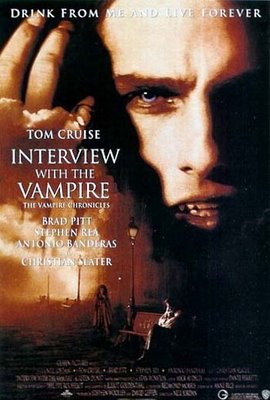
Simply heinous
Sunday, September 4, 2011
"I hope she'll be a fool-that's the best thing a girl can be in this world...

-Daisy, Chapter 1
Daisy utters these words as she finds out she has just given birth to a daughter. Based on Daisy's life as it is portrayed in the novel, why would Daisy choose to adopt this philosophy? Do you agree with her idea? Do all the women in the novel play the same "beautiful fool" role as Daisy? What effects do her beliefs have on her life? (Think in terms of her relationships with Tom and Gatsby) Do you think any women of today share this philosophy? Explain.
Subscribe to:
Posts (Atom)